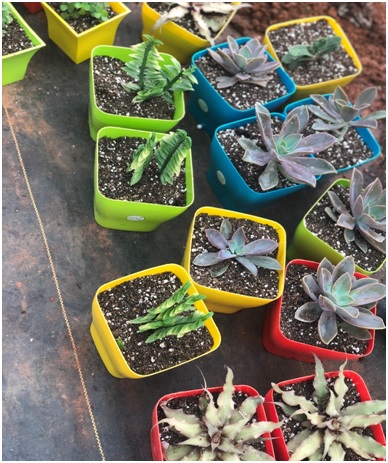
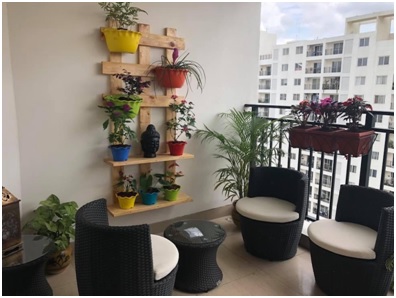
Apart from providing a beautiful aesthetic in your home, gardens also have some significant, positive impacts on health. Gardening reduces stress, risk of osteoporosis, dementia, strokes, and so forth; they provide healthy, organic, chemical-free foods for you and your family to enjoy; they enhance your sensory systems, while simultaneously reducing anger outbursts- basically, gardens are great!
We know that gardens provide us with a great quality of life, and it is only fair that we try to do the same. Here are 17 easy to follow, eco-friendly tips on gardening to keep your plants happy-
- Indigenous Species: Investing in native species can increase your plant’s life, and at the same time, it can improve the quality of soil as well.
- Pollinators: Yellow and blue flowers, for example, can help attract pollinators like butterflies and bees. These insects help to transfer pollen for successful reproduction, thereby sustaining a healthy ecosystem.
- Livestock: Given that your living conditions permit this, you can involve livestock in your gardening process. Animals like chickens keep away pests like slugs from your greens.
- Propagation: You can keep your plants healthy by removing and/or cutting off dried up portions. In keeping with this, you can also cut off healthy portions at the node and use these to create new plants for your garden.
- Perfect Pots: Good news- perfect pots are everywhere! Any container can function as a pot as long as there are holes at the bottom. Ensure that the holes are placed at the bottom-most level of your pot for a long living plant.
- Makeshift Pots: Old mugs, cans, containers, etc. can be made into pots for your plants. Just remember to make holes at the bottom. For example, an egg container can be used to grow microgreens, or an old yoghurt container can be used to plant succulents.
- Water Temperature: Your plants, just like you, can feel hot during the summer season and extremely cold when the sun is out. Make sure the water temperature is right to keep your plants happy. In the summer, cold water can be administered, maybe 1-2 times a day. In the winter, water at room temperature just once a day will suffice.
- Rain Barrels: Old buckets and bins can be fashioned into makeshift rain barrels. The water collected in these can be used to water your plants.
- Mulch: Invest in mulch. Mulch helps to retain moisture for long periods, helping you save water and keeping your plants cool during the day.
- Regrow Groceries: After a trip to the market, you can use healthy pods and seeds to grow your own groceries! The remnants of the produce, like peels, can become compost for your new plants.
- Mowing: Mow less often than you do. This helps to retain diversity in your garden.
- Digging: Digging causes carbon in the soil to oxidise, which outputs carbon dioxide. Dig your soil only when absolutely essential. In all honesty, one only needs to dig up soil at the time or planting and repotting.
- Fuel-less Machines: Using machines that don’t require fuel can be a better option for the environment. In fact, this is a better choice for you as well! Try using a rake instead of a leaf blower, or a trimmer instead of a mower; it reduces your calories as well as your carbon footprint (win-win).
- Vertical Garden: Gardening vertically can ensure that all your plants get sufficient light and breathing space. This also forms a shield around your home by keeping out pollutants and toxic fumes. Plus, vertical gardens can save you space in your garden, which means you have room for more plants!

- Fedges: Fedges are essentially dead hedges that have been fashioned into fences (fence + hedge = fedge). This helps create boundaries between different areas in your garden without losing the essence of the garden itself.
- Bark Tags: Sometimes, you may forget what a certain plant is called or what its benefits maybe. This is why lots of people use plant tags. A more sustainable option would be to use the bark of trees as tags!
- Solar Lights: This is pretty self-explanatory: you can buy little lights for your garden that use solar panels to light themselves up in the night.