This ‘Environment Day’, countries world over are promising to take steps in a way to restore our ecosystems. Ecosystems, in fact, sustain 80% of all life forms and indirectly benefit the remaining 20%. Ecosystems encompass all interactions between living organisms and non-living organisms, in a natural, circular way. When something is out of proportion, like say the amount of carbon in the atmosphere, ecosystems increase the level of peat in their soil to control it. However, since humans have arrived, ecosystems are struggling.
Methane is a compound made up of two ozone-depleting substances: carbon and hydrogen. 15% of all methane emissions come from the food we throw away, which eventually ends up in landfills. No, this article isn’t going to try and persuade you to stop eating, nor is it going to ask you to start eating your waste, oh no. Instead, it’s going to try and tell you about giving your waste a second life-
Composting: a one-stop solution to managing almost 90% of your waste! Did you know that 60% of all your waste is wet, making it easily compostable? Composting is a process that involves mixing together brown waste (rich in carbon) and green waste (rich in nitrogen), which profits you with black gold after just a few months. Compost is rightly called ‘black gold’ because it nurtures your plant with the right kind of nutrients and love, without any chemical intervention (check out our Instagram for a step-by-step tutorial on composting!).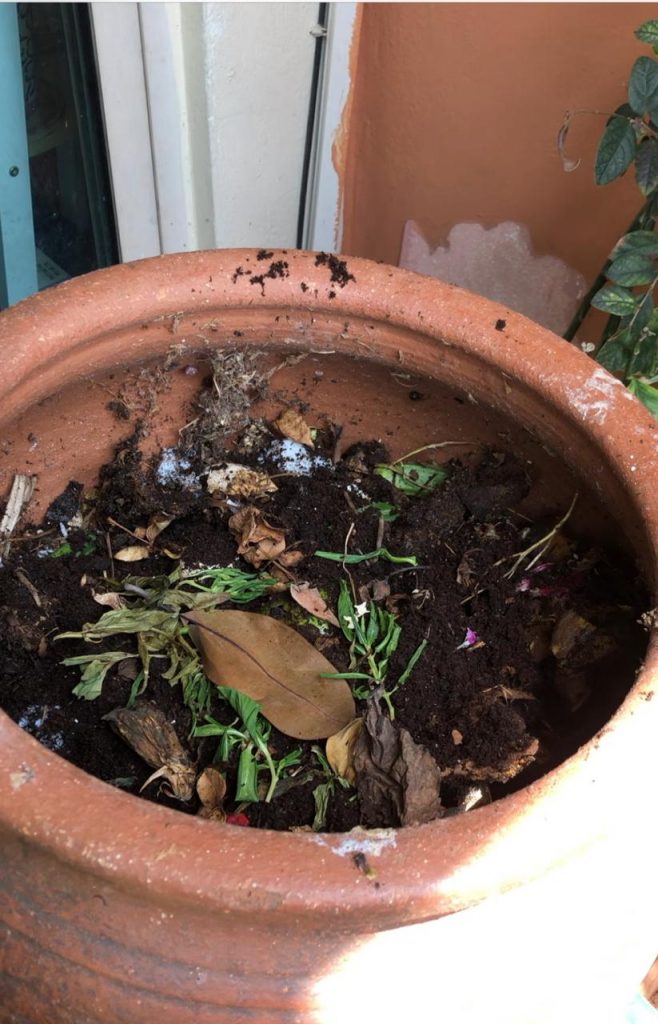 As for the remaining waste, 30% is dry, which means its reusable, especially as complements in your composting practice. You can convert empty jars and cups into pots, old bottles can become bird feeders, unused buckets can become rain barrels; you get the picture. As for the last 10% of your waste, because it is hazardous and/or toxic, it is categorized as ‘reject’ and maybe given to be treated. So, in a sound cycle of life, only 10% of waste should ideally come out of your home.
A frequently asked question is, “what composting is best for me?”. It doesn’t matter whether its anaerobic or if its vermicompost, the point is to start. In order to preserve our remaining ecosystems, it’s important to move from a linear economy (production – delivery – consumption – disposal), to a circular one (production – delivery – consumption – back to production). The ‘disposal’ phase, responsible for a huge amount of pollution, can be replaced by making biogas and compost. This process is not just sustainable, but also beautiful, graceful, natural- a true imitation of nature.